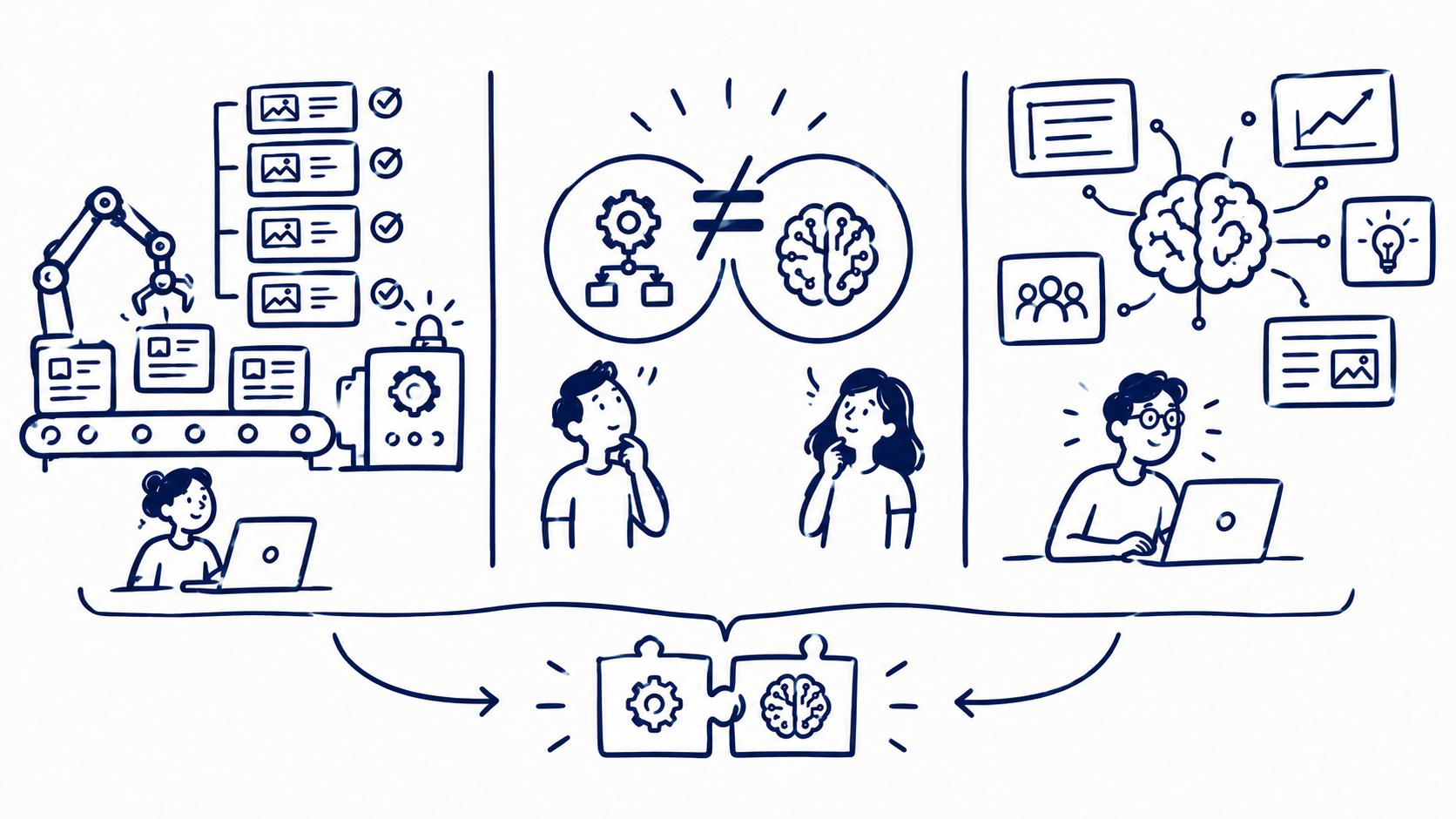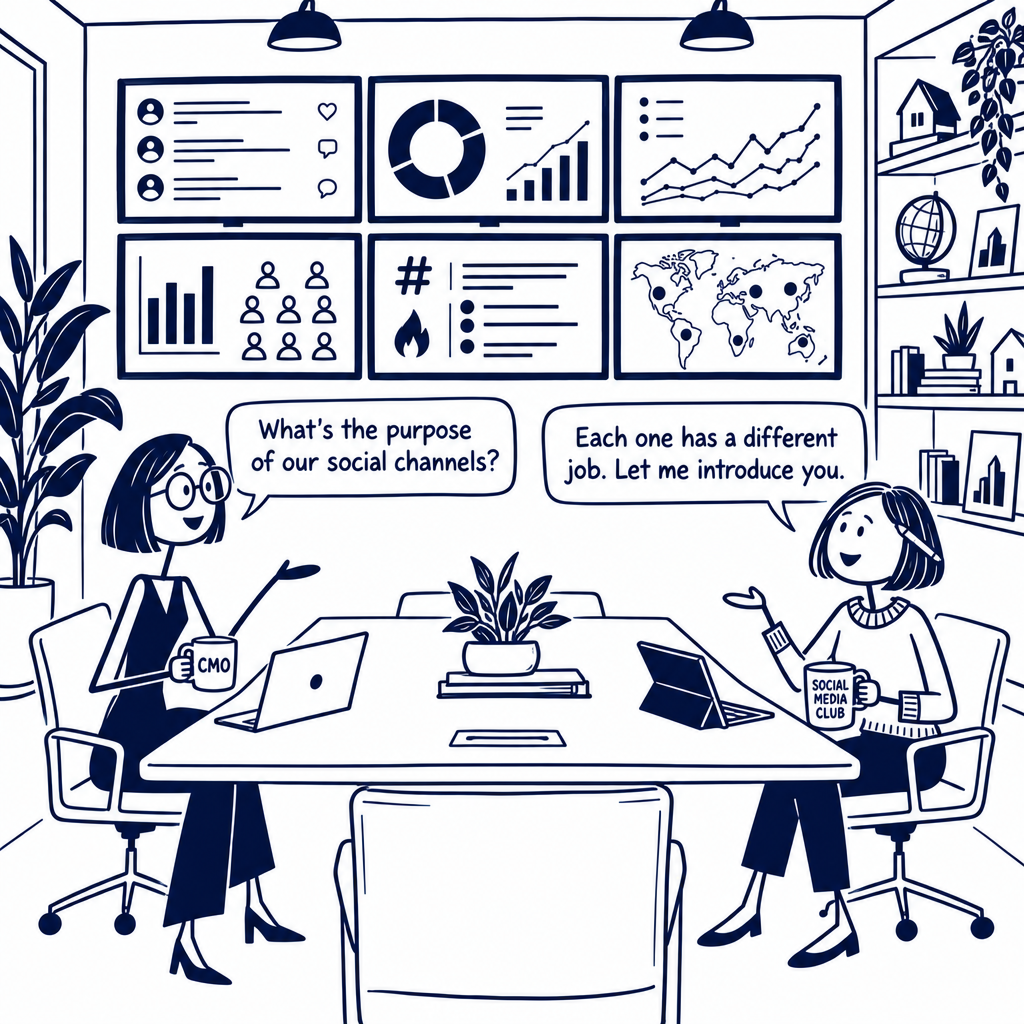

Your team has more platforms and more features to manage than ever before, and AI has raised the bar on how much content they can feasibly produce. However, none of that matters if nobody can say, in one sentence, what each channel is actually for.
Decide on purpose before you decide on tactics, because the platform landscape keeps shifting and tactics alone will not hold. Social has expanded from two major platforms, Facebook and Twitter, to countless platforms with countless features, and new features arrive constantly. Early social was an engagement and brand exercise. In recent years it has shifted hard toward revenue generation and programmatic advertising, with a sprinkle of branding on top.
There is merit to several different ways to manage a channel. But every one of them starts with purpose. A channel's purpose is the one outcome it exists to deliver: search on a platform like Pinterest, care on a platform like Threads, or shopping across Instagram, Pinterest, YouTube and Facebook. Without a defined purpose, the team ends up serving every request that comes in, because everything looks equally urgent.
Treat an undefined purpose as an efficiency problem, not just a strategy gap, because it shows up first in wasted effort and untracked metrics. Without filtering what comes in, operations get unwieldy fast. Effort goes out but never turns into results, and the metrics that actually matter don't get tracked because something else always takes priority.
One written purpose sentence per channel changes that. It tells the team what to prioritize, which metric to actually watch, and what reporting cadence to keep. It also gives you a plan for the moments that matter: what to do when a channel is close to goal, and what to do when it is falling short. With planning season underway, this is the conversation to have now, before next year's campaigns are already in motion.
I saw this firsthand with a real estate investment platform. I inherited social profiles that had gone dormant for over a year: strong follower counts, almost no engagement, and comments asking if the company was still in business. Assigning a clear purpose to each channel: thought leadership and podcast promotion on what was formerly Twitter, brand-forward credibility and proof points on Instagram, and collaborative content with influencers to build awareness on TikTok turned dormant pages into a cohesive business-driven channel strategy that we could measure against success benchmarks.
Write the purpose down rather than relying on institutional memory, because knowledge that lives in one person's head disappears the moment they leave. Your Head of Social likely already carries this knowledge. Experienced teams do, and channels need room to flex as platforms change. But a new regime often wipes the slate clean without knowing what worked.
Written purpose still earns its keep: it filters intake, onboards new team members faster, and settles disagreements about priority before they turn into friction. It also gives you a reason to revisit the strategy when a platform ships a new feature, to address how it could fit.
Ask this question directly in your next planning session, and treat the answer as a working document, not a one-time exercise. Ask it during planning season or an after-action review, so it reads as support for what's next rather than a test. The goal is a shared answer, written down: one to three objectives per active channel, each tied to a metric and a review cadence.
This week's video walks through how to turn that conversation into a one-sentence channel purpose statement that your whole team can work from.
The CMO 5-Minute Briefing
A short, actionable briefing for marketing executives: what's shifting in social, why it impacts your bottom line, and one precise question to bring to your next 1:1 with your Head of Social.
One email a week. Unsubscribe any time.