
New tools and new expectations are arriving faster than most social teams can write playbooks for them. When a decision keeps coming up without an owner, rule, or process behind it, your team compensates by winging it, and that is the challenge that we’re exploring this week.
Improvising has been part of social media since its inception. Since the discipline came into popularity during the late 2000s with Facebook and Twitter as focal point platforms, the maturing discipline of social media management was built by people who had already jumped in and learned as they went. That instinct has not gone away. If anything, it is more prevalent right now.
Platforms are innovating again, and new features arrive regularly across social platforms. When Meta rolls out something new like Edits, your team has to quickly decide whether it helps or hurts the brand to use it, how it fits the strategy, a test and learn strategy to prove it out, and assess whether it changes how you reach or retain an audience. Programmatic spend is also reshaping what social yields for a brand. All of it adds up to more decisions, made faster, with less precedent to lean on.
Put simply: winging it is a recurring decision without an owner, a rule or a playbook and social media professionals live in this ambiguity daily.
Winging it shows up in more places than you would expect. Content creation can range from a structured process to posting a photo someone happened to snap and sent over Slack. In the early days of influencer marketing, relationships would often move forward without defined KPIs, expected yield or proper legal review on contracts, which is real brand and legal exposure. Access governance gets lax when an employee leaves and still has permissions in Meta Business Manager years later. Reporting can go out before anyone has confirmed the attribution framework exists, like a line from social engagement to loyalty program sign-ups, which risks misleading leadership with a number that looks solid but is not.
I saw both sides of this when building TGI Fridays' first in-house social team. There was no monitoring process, no canned responses, and no crisis protocol when I started. But, we put tools in place for volume and response consistency, then built a tiered escalation system for crisis situations, from minor issues I handled with the PR director up through the most serious ones that pulled in senior leadership. The architecture I created took us from a full day to resolve a crisis down to 30 to 60 minutes, with far less spread and far less damage.
Of course working in social media, winging it can bring positives which for us looked like a group of American wrestlers who kept naming TGI Fridays their favorite restaurant while touring in Tokyo. We caught it through listening, treated them well through coordinating with our international team, and invited them to headquarters. That spur of the moment influencer relationship was then into a repeatable process, tagging influence thresholds and building faster cross-market coordination, meant we could catch the next opportunity instead of relying on luck.
Real-time moments and community conversations need room for judgment. That is where human connection is the value, especially as AI takes over more of the mechanical work. You do not want a rule for every quip or every community reply.
The signal that you do need a rule: a post goes out unaligned to the brand voice, or an issue gets handled as standard guest service when it should have been escalated. Those moments tell you where improvisation has become normalized in the workflow, and where an after-action review should spur a process that brings efficiency and consistency.
What would break if you took a week off?
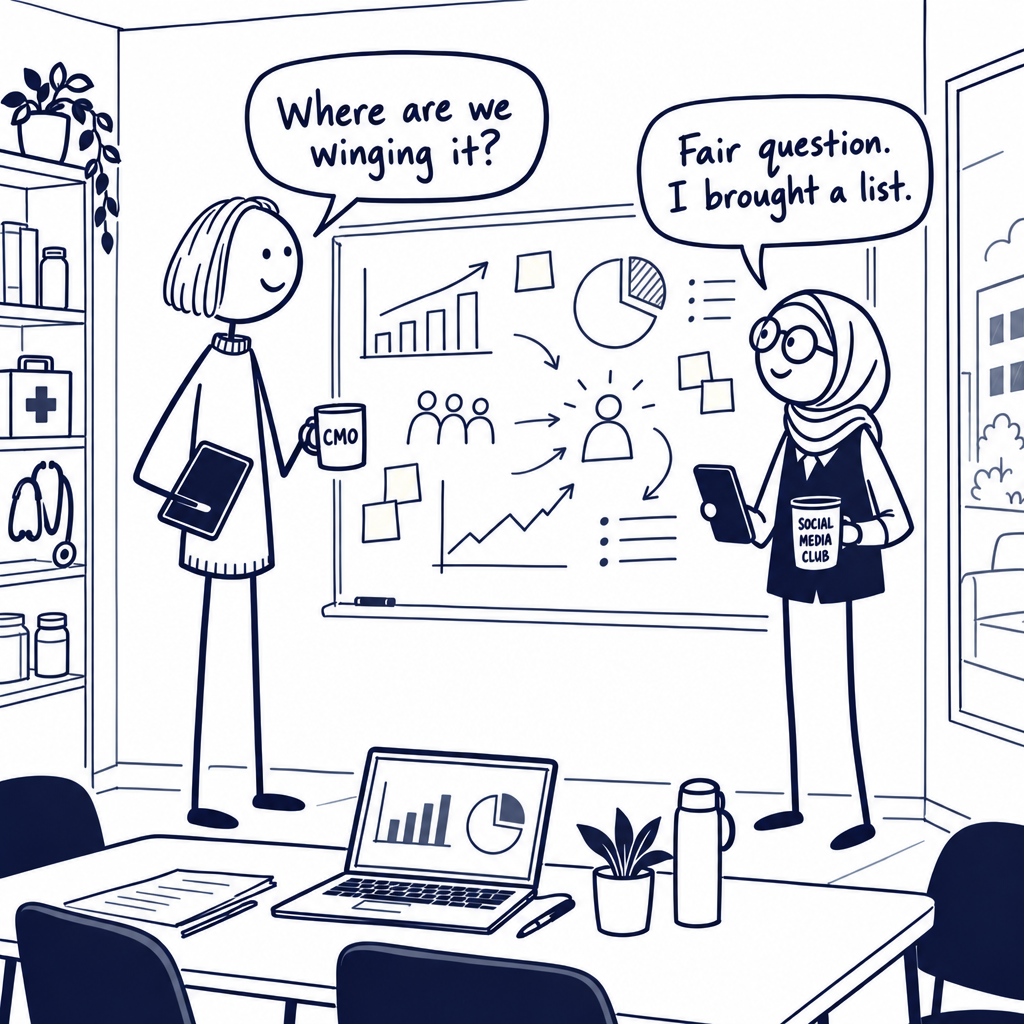
Ask this after “Where are we winging it?” rather than “Where are you winging it?” The first invites a conversation about the brand's operating model. The second sounds like a deficiency in the person. Your Head of Social is speaking on behalf of the brand, so “we” gives them room to answer honestly, about franchisee activation, approvals, or whatever else is most relevant for your business.
The week-off question then exposes what is undocumented and lives in one person's head. This question reads as care instead of inspection. Bring what you hear into a plan, or ask your Head of Social to build one, and bring in outside help if the team has no bandwidth to do it themselves.
I walk through the ways to identify where winging it in social no longer serves your business in more detail in this week's video.
The CMO 5-Minute Briefing
A short, actionable briefing for marketing executives: what's shifting in social, why it impacts your bottom line, and one precise question to bring to your next 1:1 with your Head of Social.
One email a week. Unsubscribe any time.