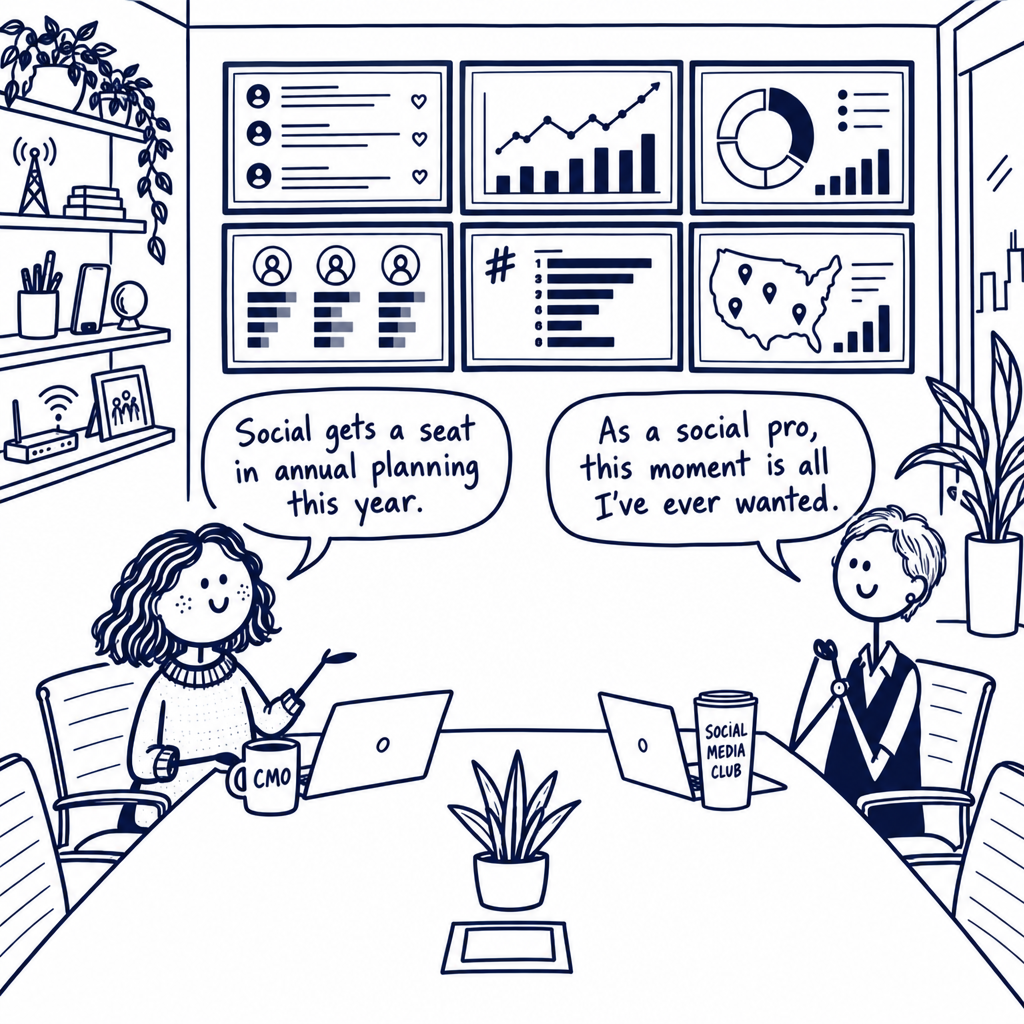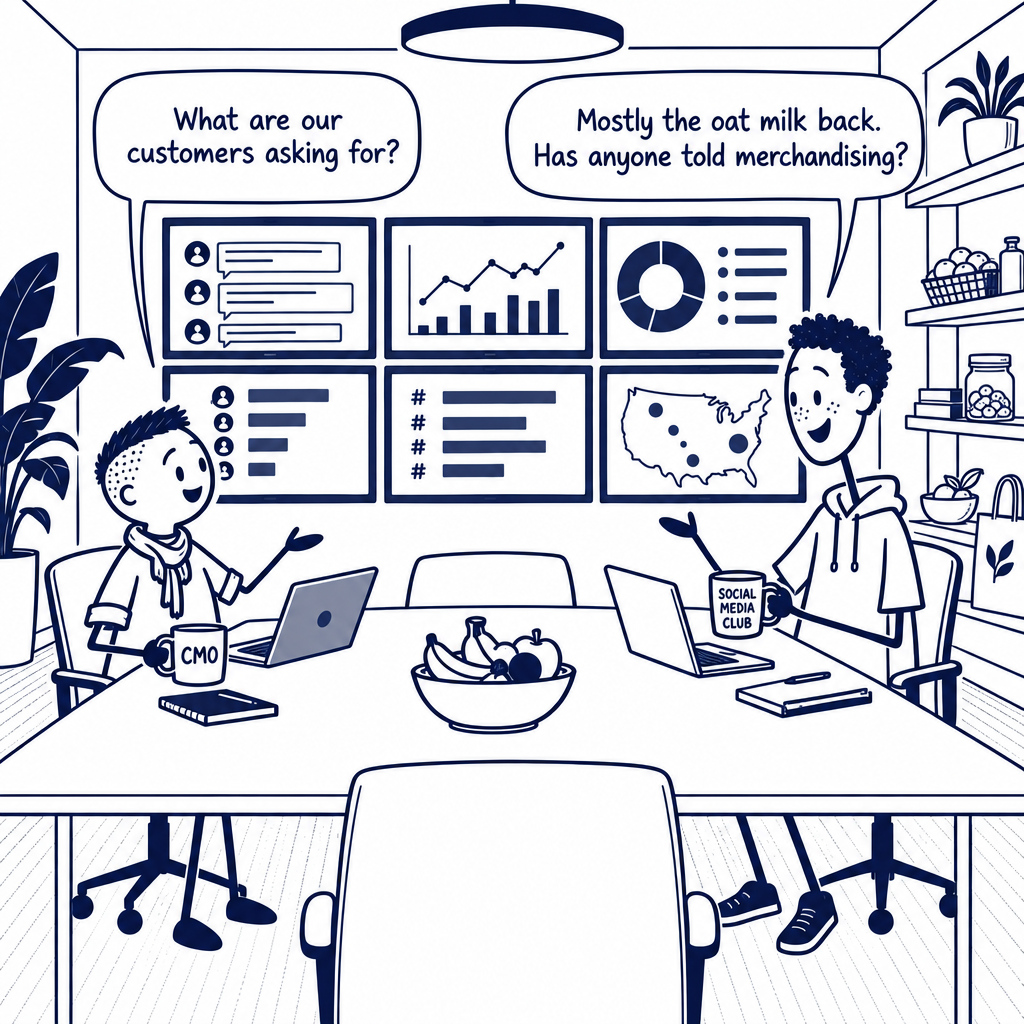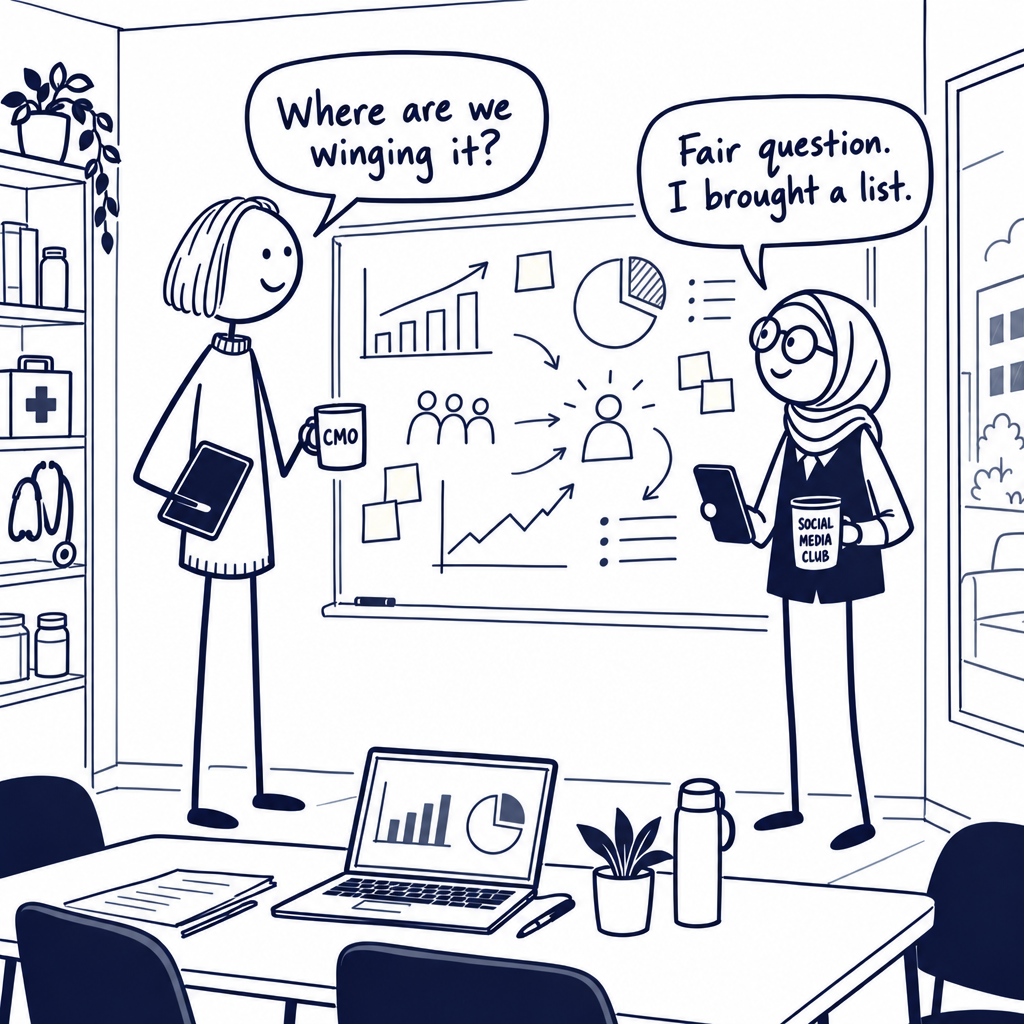
You know what your audience is saying before anyone else at the company does. So when planning season opens, the question is not whether you have something to contribute but whether you have organized it well enough to be heard.
A Head of Social annual planning contribution comes down to two things: answers to five specific questions about your audience, each backed by a soundbite or a data point, and a one-page read that puts all five in front of the room without needing a slide deck to explain them. That is the whole thesis. The rest of this post is how to build it.
Every function in planning owns its own read. Finance owns the budget. Product owns the roadmap. Social owns the real-time read of how your audience behaves: what they want, what they dislike, who they want to see in partnership with the brand. Nobody else at the table has it, and nobody else can get it the way you can.
You know which partnerships generated real positive sentiment and which ones barely registered. You know which potential partners your audience is already talking about before anyone has pitched a deal. You know which trends are gaining traction in the feeds months before they show up in a competitor's campaign. This is a read nobody else in the building can produce at this level of detail, because nobody else is in the feeds and the inboxes every day the way your team is.
Leaving social media out of annual planning is the same mistake as building a budget without finance in the room.
Each of the five questions gets one strongest line backed by one piece of evidence: a sentiment graph, a tagged data pull, or an actual post. Build this gradually through the year by tagging content as patterns emerge instead of scrambling through your feeds the week before planning starts. Involve your coordinators: they catch the supporting details a Head of Social working alone could miss.
Here is how I would walk through the five, one at a time:
If you have never been invited, do not wait for an invitation. Build the one-page read first, then ask for 15 minutes with leadership to walk through it. You are not asking for a seat out of status. You are offering the one input the plan is currently missing, and the one-pager makes that concrete instead of political.
Often, social media teams only hear about the plan once it is finalized, after the insight that could have shaped it was sitting in their feeds the whole time. If leadership has any kind of open-door policy, use it: go in with the one-pager, point to two or three findings, and say plainly that social representation in the room would add value beyond a single pre-brief. If that does not land as an invitation on its own, frame the ask as career development: at your level, understanding what happens during planning season is a reasonable expectation, and offering to sit in as the scribe is a low-friction way to get in the room.
Put all five questions on a single page: one strongest line per answer, plus the evidence behind it, nothing that needs a slide deck to explain. Hand out a copy to everyone in the room, or send it digitally, and treat it as a conversation starter rather than a presentation. The format is part of the advice: concise is what makes it usable.
Leave off anything that requires you to go deeper than the room is ready for in that first conversation. You can always go further on request. The point of the one-pager is to spark the aha moments, the brainstorming, the “I didn't know people thought that about the brand” reaction, not to perform expertise at people who are seeing this for the first time.
Before anyone asks you anything, answer this for yourself: if you were the CMO, what would you want from the brand in 2027, and why? Answering it in advance means you walk into planning with a point of view on where things should go, not only a report on where things have been. The planning meeting is about what happens next as the team learns from the past, so looking forward leaves a lasting impression.
There is often a generational distance between leadership and the people closest to the audience day to day, and this builds a bridge. It pushes you to think from your boss's seat, to weigh what is realistic against what would genuinely move the brand, and to surface an opportunity nobody else is watching for yet because nobody else is in the feeds.
Tomorrow's CMOs are today's social media professionals, and the habit of asking this question of yourself is part of how that future gets built.
Keeping the seat means staying close to whoever leads annual planning and following up on whatever sparked interest in that first meeting, not waiting to be invited back. If a thread piqued conversation, go deeper on it: pull more listening data, build a short follow-up, maybe five slides, and bring it directly to the planning lead before the next checkpoint.
Another option is to collaborate with a colleague on their action items to support bringing more social insight to flesh out their approach. This helps display the power and versatility of social media data points and where they can add impact.
The common conclusion to this experience for social professionals is getting pulled in for one meeting, contributing the read, and then hearing crickets once execution starts. The fix is not a bigger ask, it is consistent, smaller ones: track which parts of your one-pager generated real conversation, go deep on exactly those threads, and keep returning to the person running planning with a tighter, more specific follow-up each time. When results come in later in the year, point back to the insight that sparked them. That is what turns one invitation into a standing one.
Start with the five questions today, not the week planning begins. Pull your tagging, chart your sentiment trend, and identify the one theme in your data that would genuinely surprise the room. Lead with value and the seat tends to follow. If you want a fuller view of where social work across your team could run more efficiently heading into 2027, the Social Operations Map walks through the ten areas of operations worth mapping before the year gets busy, and read the paired CMO Briefing issue to see exactly what your CMO was asked to bring to you first.
Sources:
The CMO 5-Minute Briefing
A short, actionable briefing for marketing executives: what's shifting in social, why it impacts your bottom line, and one precise question to bring to your next 1:1 with your Head of Social.
One email a week. Unsubscribe any time.