
When I look at a brand's comments and DMs, I usually find more candid signals about what the audience actually wants than what I hear inside the four walls of the brand. Customers will tell you what they are experiencing, what they would like to experience instead, and whether you are doing a good job or a bad job. They are painfully honest, and when the same thing comes up across multiple people, that is a theme that demands you and your team's attention.
I think of social conversations as secret shopper data that brands get for free. Companies pay real money to send someone in to evaluate the experience. Meanwhile, customers walk in every day and go straight to social media to tell you exactly what happened and in excruciating detail, most of the time. I know what you're thinking. And, yes, a lot of what gets voiced is negative, but the positive feedback is in there too, and it is just as useful.
At TGI Fridays, I built the rules engine inside Sprinklr that assessed every inbound message the moment it arrived. It tagged the location mentioned, the field marketing director and franchisee group tied to that store, the service domain (bartending, for example), sentiment, active LTO programs, menu items, and any names mentioned. Public, negative messages were addressed first each day, per our service level agreement, to protect the brand before the team moved into everything else.
This tagging structure fed automated weekly roll-up reports that went straight to Operations, Field Marketing, Beverage Innovation, Culinary, Learning and Development, and Digital. In certain reports, when we overlaid that qualitative data with store sales, we could see our top ten and bottom ten performing stores and spot themes. That enabled Operations and Field Marketing follow up for context, target training with Learning and Development, and recognize strong locations and high-performing team members, specifically. Culinary also used social media's menu-level tagging to investigate a sourcing issue with a specific product, and the data helped provide context, location, and resolution to get a better version of that product back into the field.
A listening tool and a monthly report are valuable, but they leave a gap when compared to inbound conversations. Listening casts a wide net and often needs heavy configuration to filter out noise (at TGI Fridays, even the word “Friday” caused trouble, as you can imagine). Inbound conversation is different: it is already addressed to your brand, so it is inherently relevant. And a listening monthly report generally won't be as actionable for departments outside of marketing versus reporting from a rule applied the moment a message comes in that can reach a store team in hours.
If I built that engine today, I would not change much. Deterministic rules stay close to your exact terms, and they are cheaper to run than AI, which charges per query rather than running once you configure it. Where I would bring in AI is to generate a short, three-sentence summary for each department's weekly report, something a busy department head can read between meetings, with a person on my team checking it before it goes out. Rules for the automated tagging that can be defined and AI for the summary with a person reviewing it before it moves anywhere else.
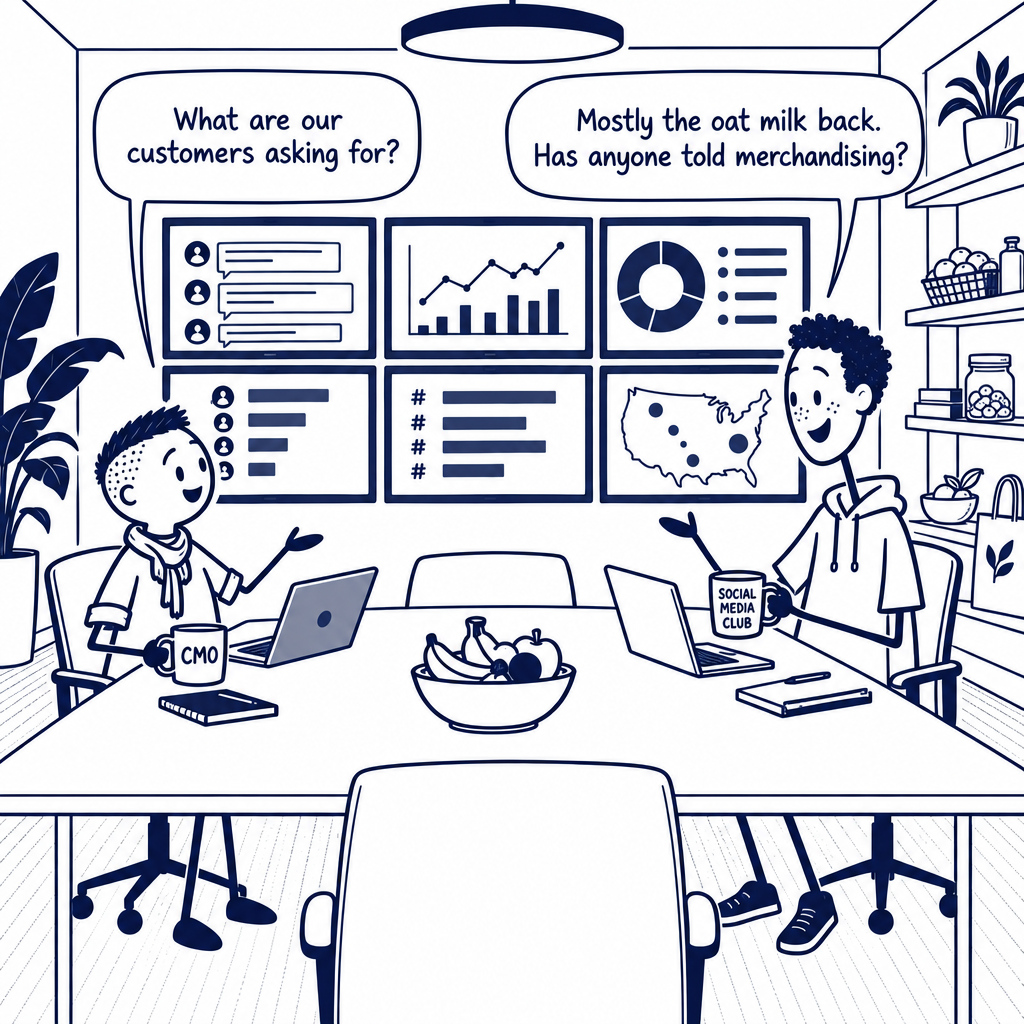
What are customers asking for that never reaches product, service or operations?
Your Head of Social likely already has a running list of what customers want more of and less of. This question helps you approach the conversation and opens the door to building a direct line from Social to the teams and business units across your company who can actually act on it.
This week's video walks through the rules engine and the reports that came out of it.

The CMO 5-Minute Briefing
A short, actionable briefing for marketing executives: what's shifting in social, why it impacts your bottom line, and one precise question to bring to your next 1:1 with your Head of Social.
One email a week. Unsubscribe any time.